
AI that helps engineers design lighter, cooler, faster hardware
XLAB Innovations turns simulation physics into real-time design intelligence — topology optimisation, fluid–structure interaction and thermofluid in one workspace, so teams act before small issues become costly redesigns.
Built for leading engineering teams
Turn fragmented simulation data into one design view
XLAB brings together CAD, meshes, solvers, test rigs and surrogate models into one layer, helping teams see what the physics is doing, why, and what to change next.
Unified simulation data
Bring geometry, meshes, solver runs and test data for structures, flow and heat into one design intelligence layer.
Actionable design insights
Move from contour plots to clear recommendations: where to remove mass, where flow separates, where heat builds up.
Early failure detection
Spot flutter, buckling and hot-spot risks long before a prototype is cut — with uncertainty bands, not just single numbers.
How XLAB works
From geometry to actionable design
XLAB fits around your existing workflow without replacing your infrastructure. Your team gets clear, physics-backed answers across components, load cases and operating envelopes.
1. Connect
Connect your geometry and solvers
Start from CAD, a design space or a reference case. XLAB builds curved high-order meshes and works alongside the tools you already use.
2. Simulate
Simulate what matters, in 2D and 3D
Run topology, aeroelastic, CFD and conjugate heat transfer studies in the browser, on CPU workers or the GPU.
3. Optimise
Optimise before issues become costs
Multi-fidelity and quantum surrogates screen thousands of candidates, quantify uncertainty and write up the evidence automatically.
XLAB Copilot
Your AI assistant for simulation
Ask in plain English about loads, flow, heat or past runs, and get answers grounded in your own studies and a curated research corpus.
Ask in plain English
No digging through solver logs or contour plots.
Get publishable reports
Papers and slide decks drafted from recorded run data, with uncertainty analysis.
Start the conversation
Answers come from reduced-order solvers and surrogates; always check critical results with full-fidelity analysis.
Three coupled physics domains
Case Studies
See how engineering teams use XLAB to cut mass, clear stability margins, manage heat and make faster design decisions.
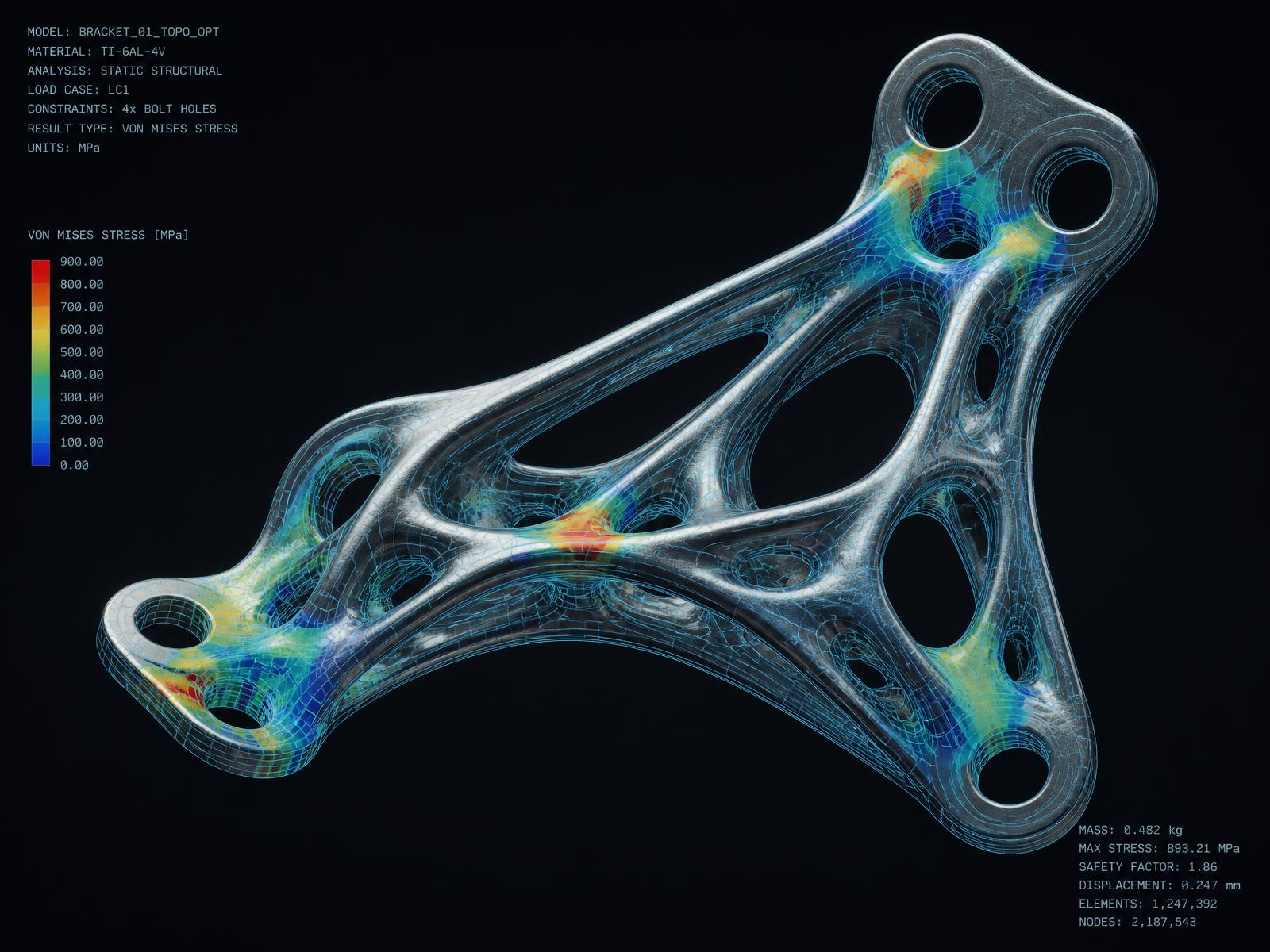
34% mass removed from a multi-lug bracket
Constrained topology optimisation kept stresses within limits while cutting a third of the material.
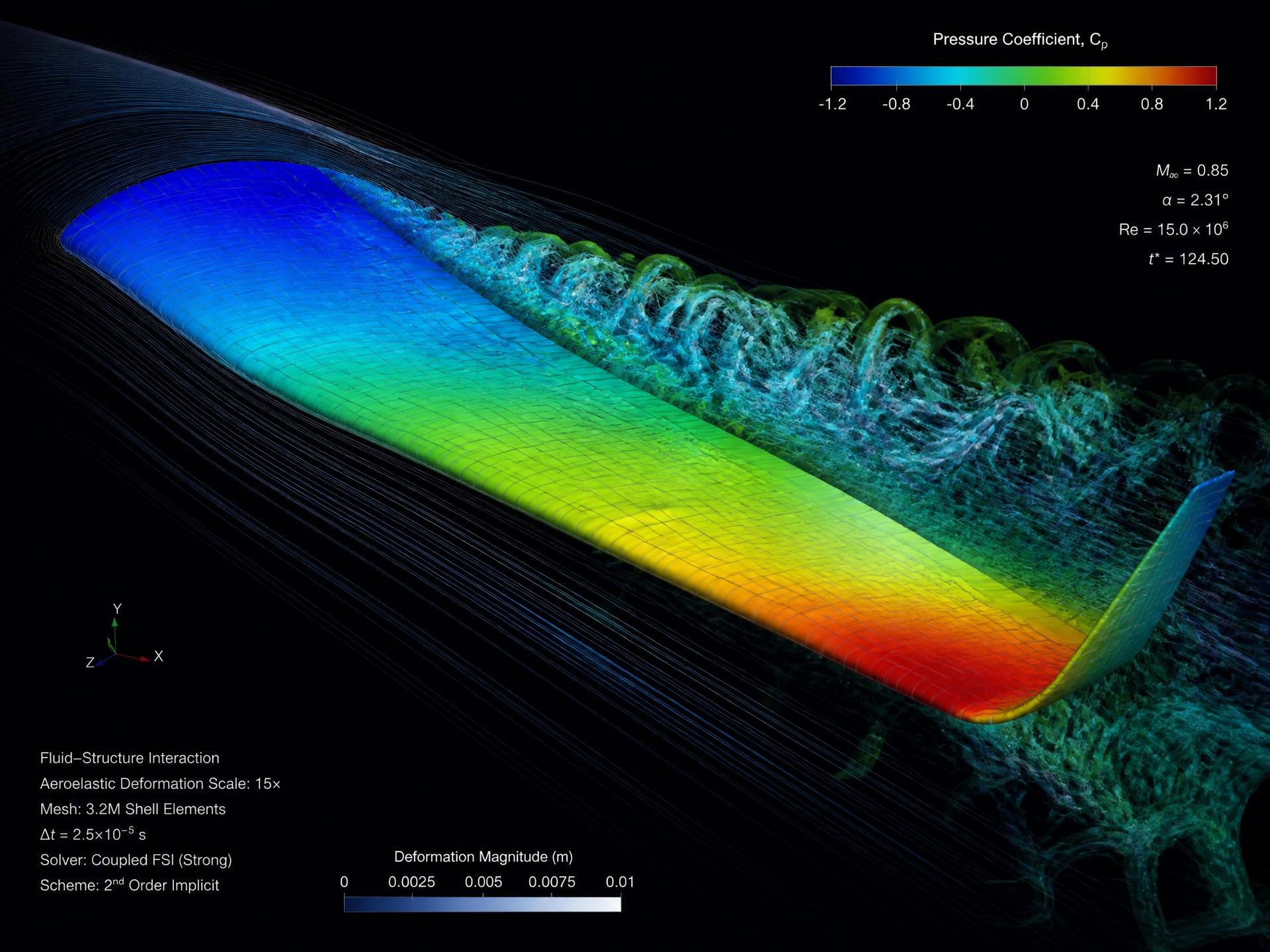
Flutter cleared in one design cycle
A coupled FSI sweep across 640 flight points replaced six weeks of manual analysis on an eVTOL wing.
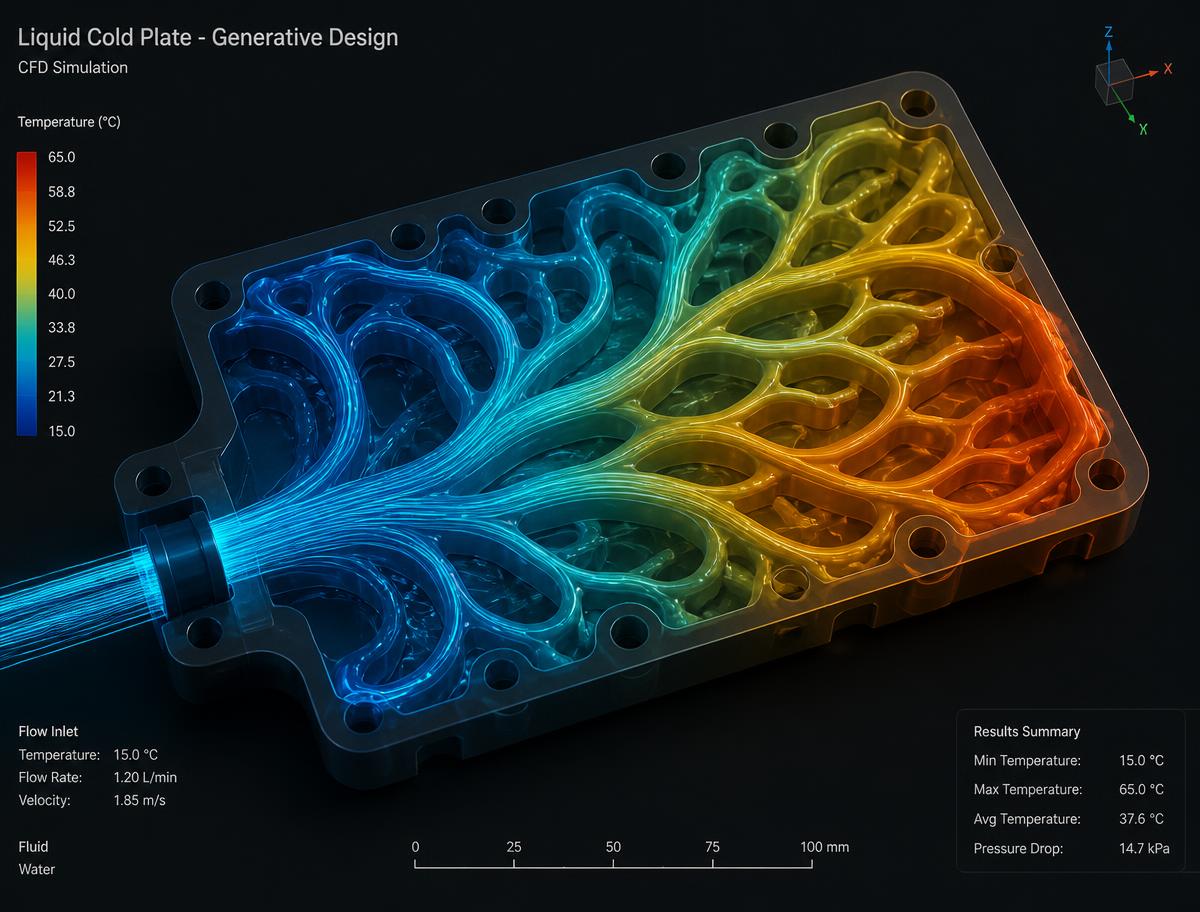
Lower pressure drop in a cold plate
Fluid topology optimisation reshaped coolant channels for a battery pack, balancing ΔT against Δp.
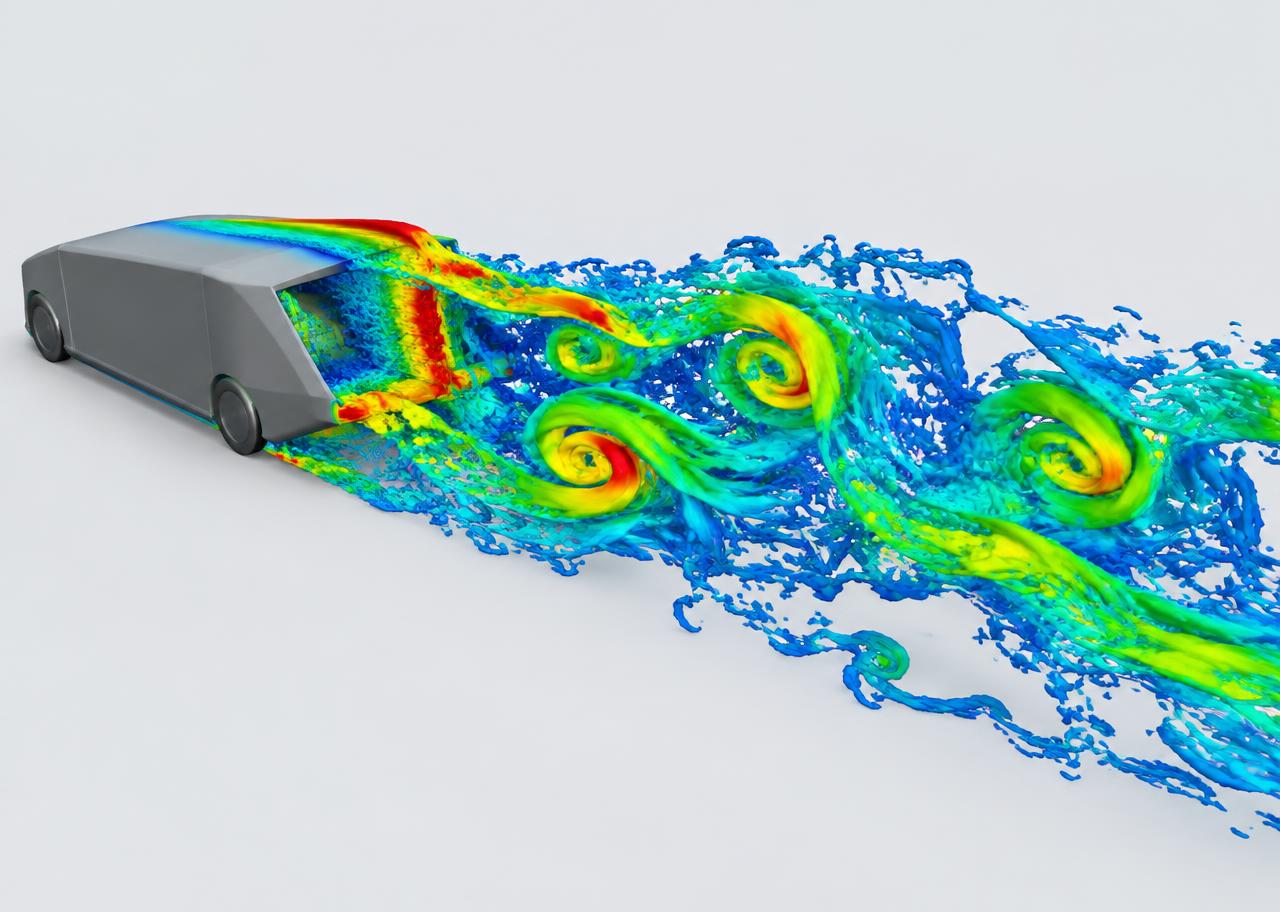
Wake structures resolved behind the Ahmed body
3D large-eddy simulation and Q-criterion visualisation exposed the vortices behind vehicle drag.
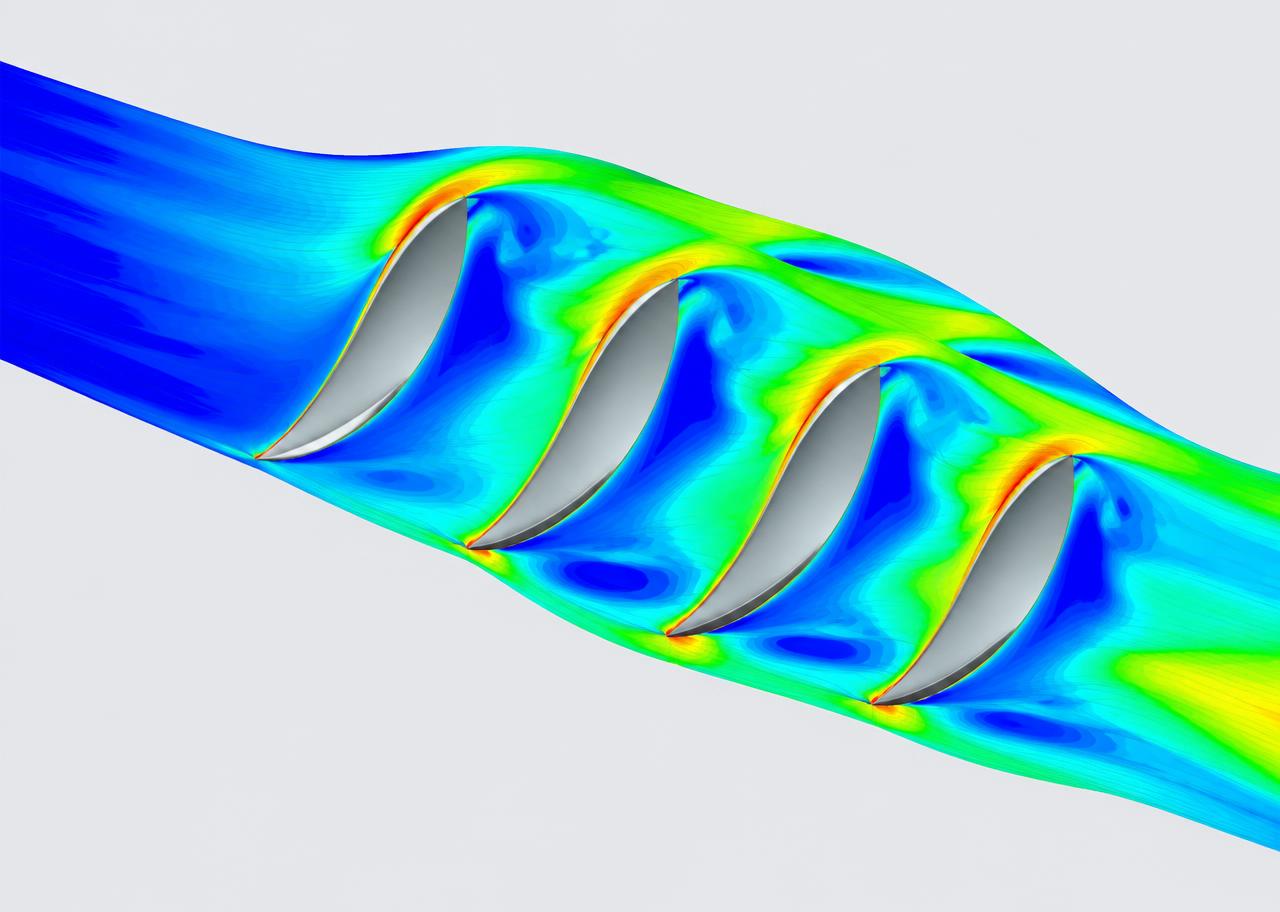
Turbine cascade losses quantified
High-order meshes on the T106A cascade tracked passage pressure loss across operating points.
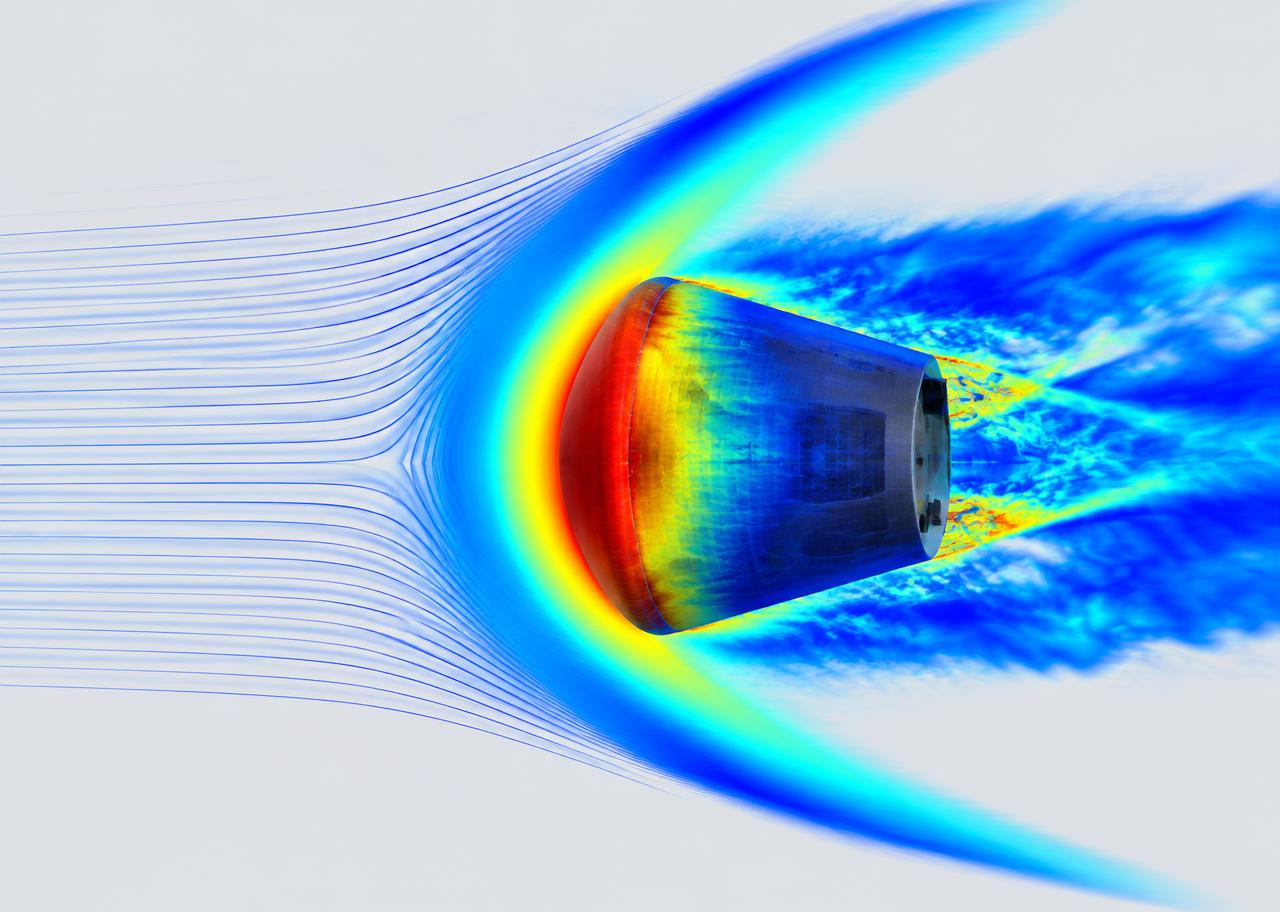
Re-entry heating mapped on a capsule
Hypersonic studies with retro-propulsion jets compared shock stand-off and heat flux in 2D and 3D.